Motorcycle helmet law and its effect on a damages claim
A missing helmet does not erase a claim, but it is often used to argue that part of the injury was avoidable.
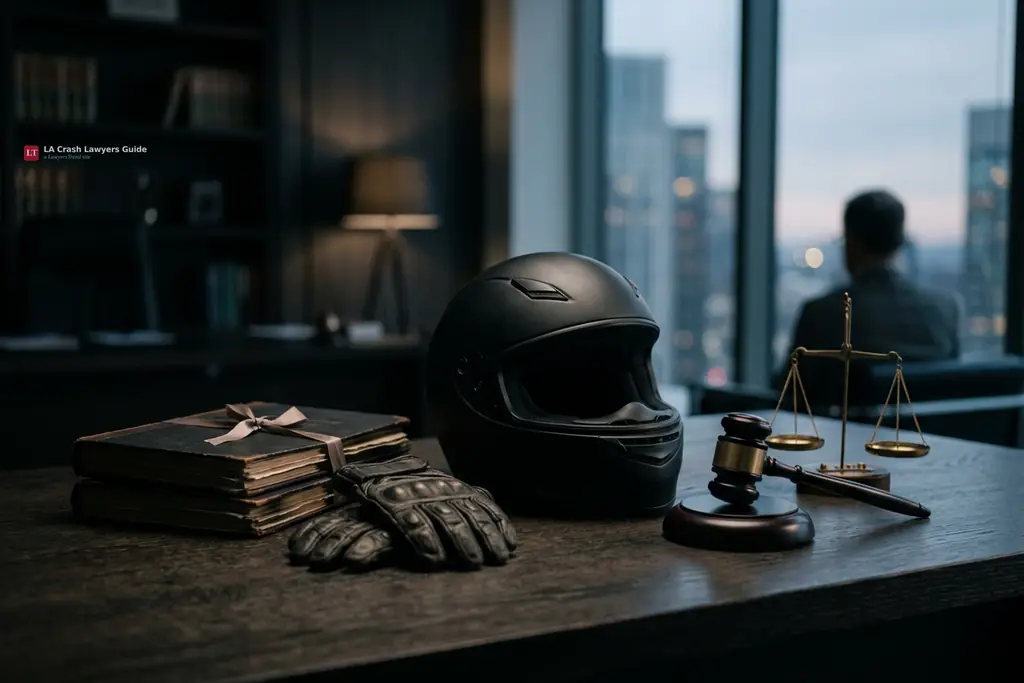
California requires a motorcycle driver and any passenger to wear a safety helmet that meets the standards set under Vehicle Code 27802, which include Federal Motor Vehicle Safety Standard No. 218, fastened with the straps and sized to fit securely (Vehicle Code 27803; Vehicle Code 27802). After a crash, whether the rider wore a compliant helmet becomes a topic in the insurance claim, particularly when there was a head or brain injury.
Helmet use does not decide who caused the crash
The question of who caused the crash is separate from the question of what injuries resulted. A rider hit by a driver who ran a red light does not become responsible for the collision by omitting a helmet. The insurer's argument instead concerns the injuries: that some or all of the head injury would have been prevented or reduced with a compliant helmet.
How the defense may use it
An insurer may argue that riding without a compliant helmet was the rider's own negligence. Under California's comparative fault rules, a defendant who proves that the plaintiff was negligent and that the plaintiff's negligence was a substantial factor in causing the harm can have the plaintiff's damages reduced by the plaintiff's percentage of responsibility (Judicial Council civil jury instructions, CACI 405). Because the defendant has to prove that connection to the harm, the argument carries little weight for an injury a helmet would not have affected, such as a broken leg. A rider who did wear a compliant helmet avoids the issue.
What damages can include
A person injured by another's negligence can generally seek compensation for harm caused by the wrong (Civil Code 3333). In a motorcycle case this typically includes:
- Medical expenses, past and future.
- Lost income and reduced earning capacity.
- Motorcycle repair or replacement value and damaged gear.
- Pain, suffering and loss of enjoyment of life.
Insurance points specific to riders
- California requires drivers and owners of motor vehicles to be able to establish financial responsibility (Vehicle Code 16020). For policies issued or renewed on or after January 1, 2025, the minimum liability limits are $30,000 per person, $60,000 per accident and $15,000 for property damage (Vehicle Code 16056).
- Uninsured/underinsured motorist coverage on a rider's own policy may be available (Insurance Code 11580.2), and some policies also include medical payments coverage.
- Check whether the policy was written for the motorcycle you were on and who is listed as a driver.
Keep the helmet
Do not discard the helmet or gear after a crash. It documents the impact, and the insurer may ask to inspect it. Photograph it, store it, and note its brand and model, since it will be the first thing examined in a dispute about head injuries.
Deadlines
The two-year deadline for injury lawsuits applies (Code of Civil Procedure 335.1).
Sources
- Vehicle Code 27803 (motorcycle helmets)
- Civil Code 3333 (measure of tort damages)
- Vehicle Code 27802 (helmet standards)
- Vehicle Code 16020 (financial responsibility)
- Vehicle Code 16056 (minimum liability limits)
- Judicial Council of California Civil Jury Instructions (CACI), 2025 edition
- Insurance Code 11580.2
- Code of Civil Procedure 335.1